Top Vendor Management Software Tools: 2026 Reviews
Find the best vendor management software in 2026. Compare Zelosify, Gatekeeper, and enterprise VMS tools to streamline onboarding, contract tracking, and billing validation.
When records are stored in different folders, operations and procurement staff have trouble tracking supplier performance. In the absence of the right vendor management software, businesses can find themselves with auto-renewal surprises, compliance issues, and overbilling on invoices. This guide discusses the best operations-focused and enterprise VMS solutions, such as Zelosify, the AI VendorOps platform which transforms vendor compliance, contracts and invoices into a single operating workflow, outlines selection criteria, and helps narrow down the choices for your vendor ecosystem.
Key Takeaways
- The top vendor management solutions offer a centralized approach to supplier management, automate the onboarding procedure, and reconcile invoices with actual delivery.
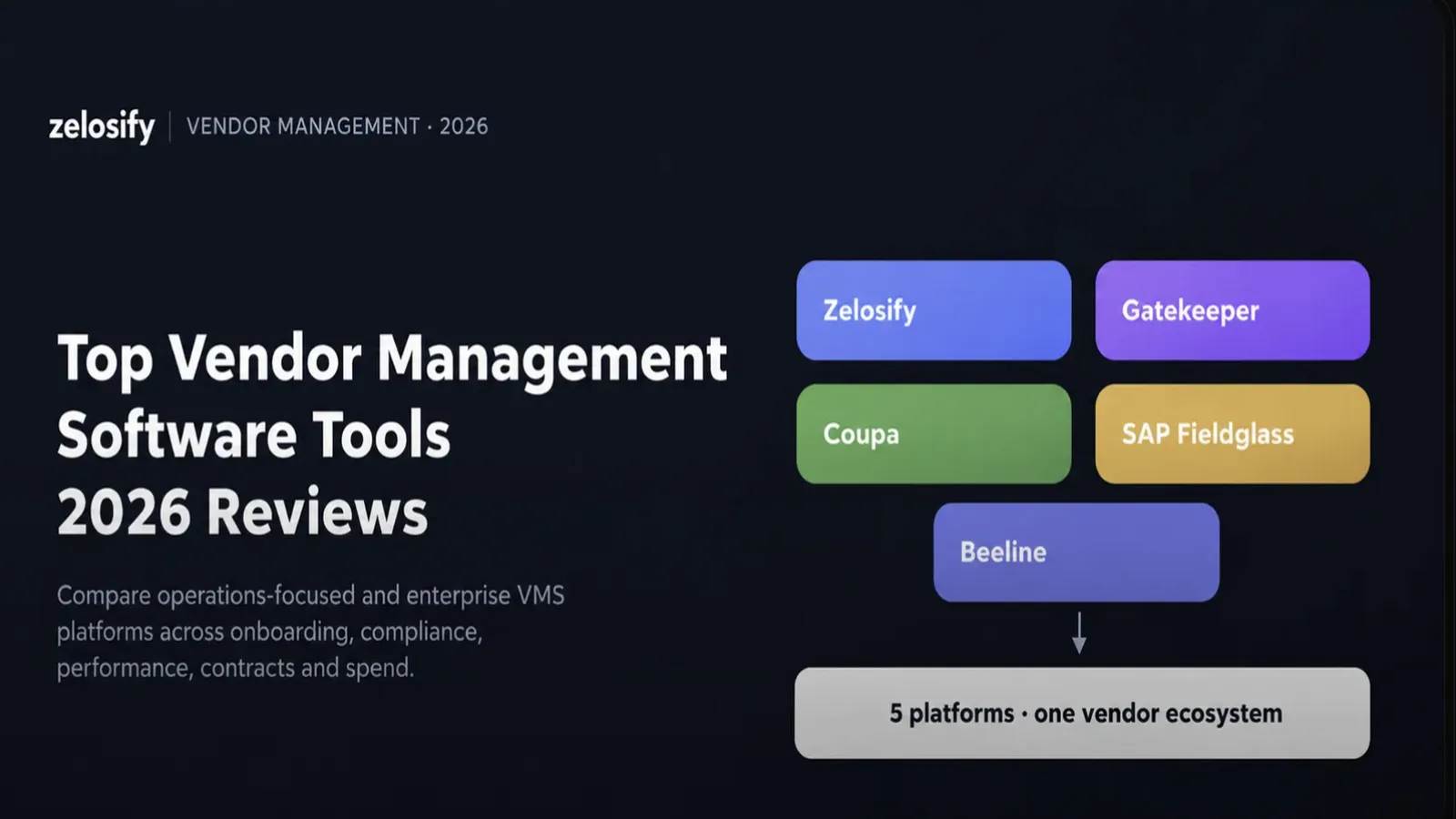
- This guide compares five popular options: Zelosify, Gatekeeper, Coupa, SAP Fieldglass, and Beeline.
Why Do Operations Teams Need a Vendor Management System?
As organisations grow, having vendor lists in spreadsheets makes it difficult to identify real blind spots. When there is no centralized VMS, operations teams can't easily see which vendors are still active, who owns each relationship, or whether a compliance certificate has quietly expired. A dedicated VMS can solve it by offering the following:
- Supplier Self-Onboarding: Suppliers upload their tax documentation and security declarations, relieving you from administrative burdens.
- Renewal Negotiation Power: Teams receive automated reminders before a window to send a renewal notice closes, preserving negotiating leverage.
- Unified Performance Scorecards: Delivery and SLA metrics from vendors are recorded in a single context, making accountability straightforward.
Standardizing Vendor Data
A VMS maintains all suppliers in the same set of structured data fields, such as corporate tax ID, banking details, and insurance records. No more individual storage or reliance on an individual's inbox. Teams can instantly verify supplier status rather than hunting for it.
How to Evaluate the Top Vendor Management Tools
The challenge to find the right system is a compromise between compliance controls and operations speed. We looked at the top VMS platforms with regard to:
- Time-to-Value for deployment: How quickly the system is set up and introduced to teams.
- Onboarding Automation: How flexible the custom vendor onboarding checklists actually are.
- Coverage of various functions: Built-in capabilities to Manage vendors end to end from onboarding to settlement of dues.
The Role of Custom Checklists
Good onboarding requires checklists that fit the vendor risk. A low-risk utility provider shouldn't go through the same checks as a staffing vendor. Good systems route each vendor through a category-specific approval chain automatically.
Best Vendor Management Tools by Use Case
Assuming you're convinced you need a VMS, the next challenge is organizational fit. Most tools fail not because they lack features; they're simply designed for an operating reality that's not the same as yours.
By 2026, vendor management platforms have split into distinct categories that reflect how differently organizations operate. It's best to start in the correct lane early and avoid months of rework later.
- Compliance-driven teams typically appreciate systems that are focused on compliance, traceability, and audit. A focus on contracts, approval procedures, and evidence, not just the speed of the platform, is a natural fit when regulatory risk is high.These are typically established companies.
- Teams focused on vendor performance and SLAs look for tools that view vendors as operational partners. Here, scorecards, milestone monitoring, and accountability are more important than everlasting records.These are typically startups.
Core Capabilities to Expect in Modern Vendor Management Tools
What makes a modern VMS very important for organization is not one single feature; it's how the features work together across the vendor lifecycle:
- Vendor Onboarding & Information Management: Information is collected once, structured, and reused across teams, so nothing important goes missing.
- Centralized Vendor & Contract Repository: Store everything about each vendor relationship in one place, linked directly to current contracts, amendments, and records, so everyone works from the same source of truth.
- Contract Lifecycle & Renewal Tracking: All renewal dates, termination windows, and milestones are tracked automatically.
- Vendor Performance & SLA Monitoring: SLAs are no longer just documents but are now available as references to help teams identify poor performance promptly.
- Risk, Compliance & Security Assessments: Assessments are based on the criticality of the vendor, making security reviews routine rather than an annual fire drill.
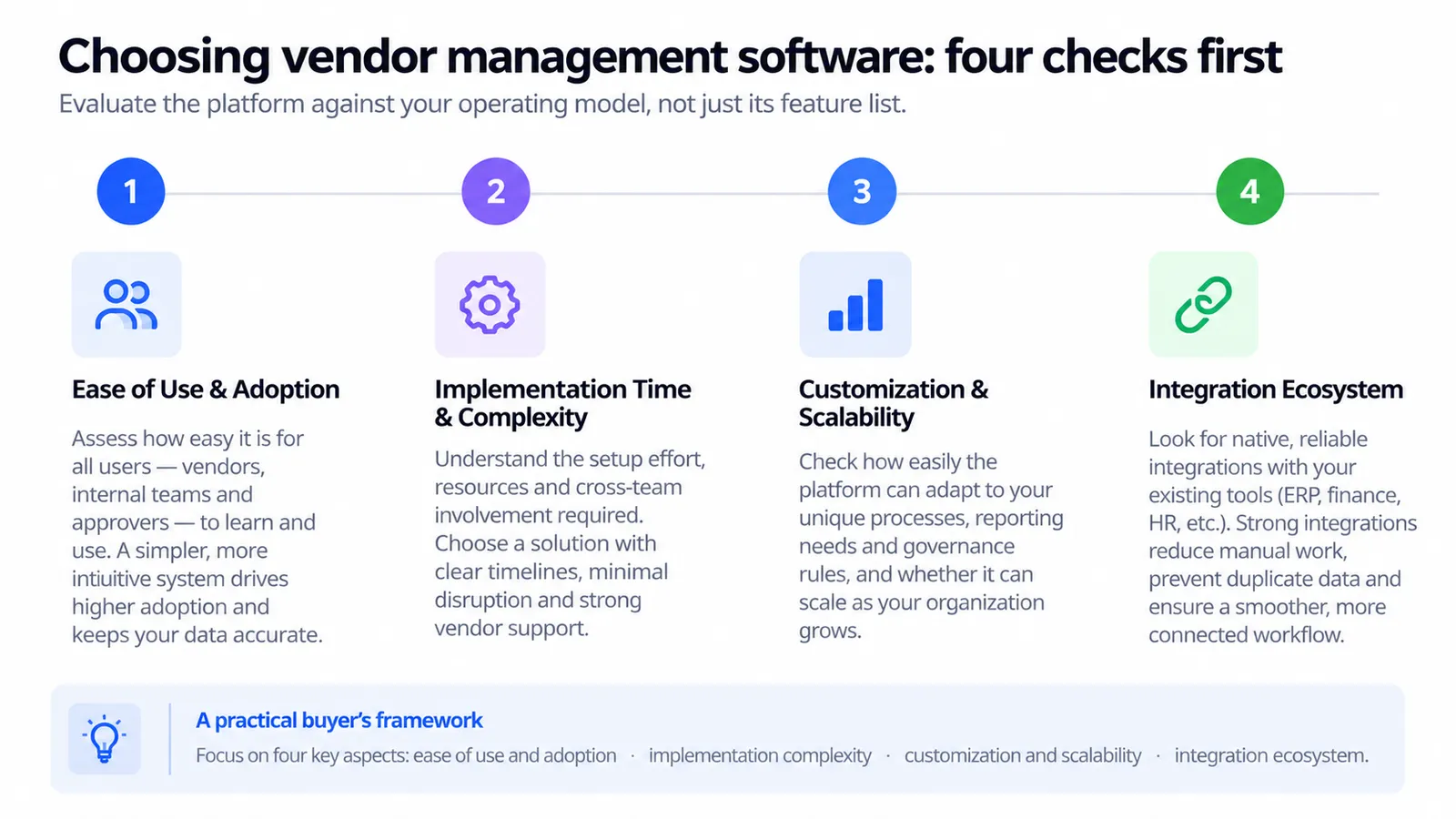
How to Evaluate Vendor Management Software (Buyer's Framework)
When the core skills have been identified, the real challenge is execution:
- Ease of Use & Adoption: Application is easy to use and it should be intuitive for users.
- Implementation Time & Complexity: Some require minimal set-up; others need extensive cross-team collaboration. Upfront clarity on this is essential.
- Customization & Scalability: As the organization develops, the system should evolve alongside it without constant reconfiguration of governance, reporting, and roles.
- Integration Ecosystem: Native integrations reduce manual work and duplicate data, and their reliability matters most in complex enterprise environments.
Agentic AI & the Future of Vendor Management (2026 Outlook)
Vendor management is shifting from reactive oversight toward predictive control. AI isn't just automating tasks anymore — it's starting to shape how risk, performance, and obligations get interpreted:
- AI-driven vendor risk scoring makes continuous assessment possible instead of relying on periodic reviews.
- Contract intelligence surfaces obligations, penalties, and dependencies in context, cutting reliance on manual reviews.
Vendor Management vs Vendor Risk Management vs Procurement Tools
Confusing these three categories usually leads to overlapping tools and fragmented ownership:
- Vendor Management Systems (VMS): Needed once vendors touch daily operations — contracts, renewals, performance, and compliance all working together.
- Vendor Risk Management (VRM): Tools focused mainly on security assessments and third-party risk.
- Procurement Suites: Strongest at sourcing, purchasing, and spend control, but rarely go deep on post-signature operational compliance.
Top Vendor Management Software Tools Reviewed
Below are detailed evaluations of the top VMS-only and operations-focused platforms in 2026.
Comparison at a Glance
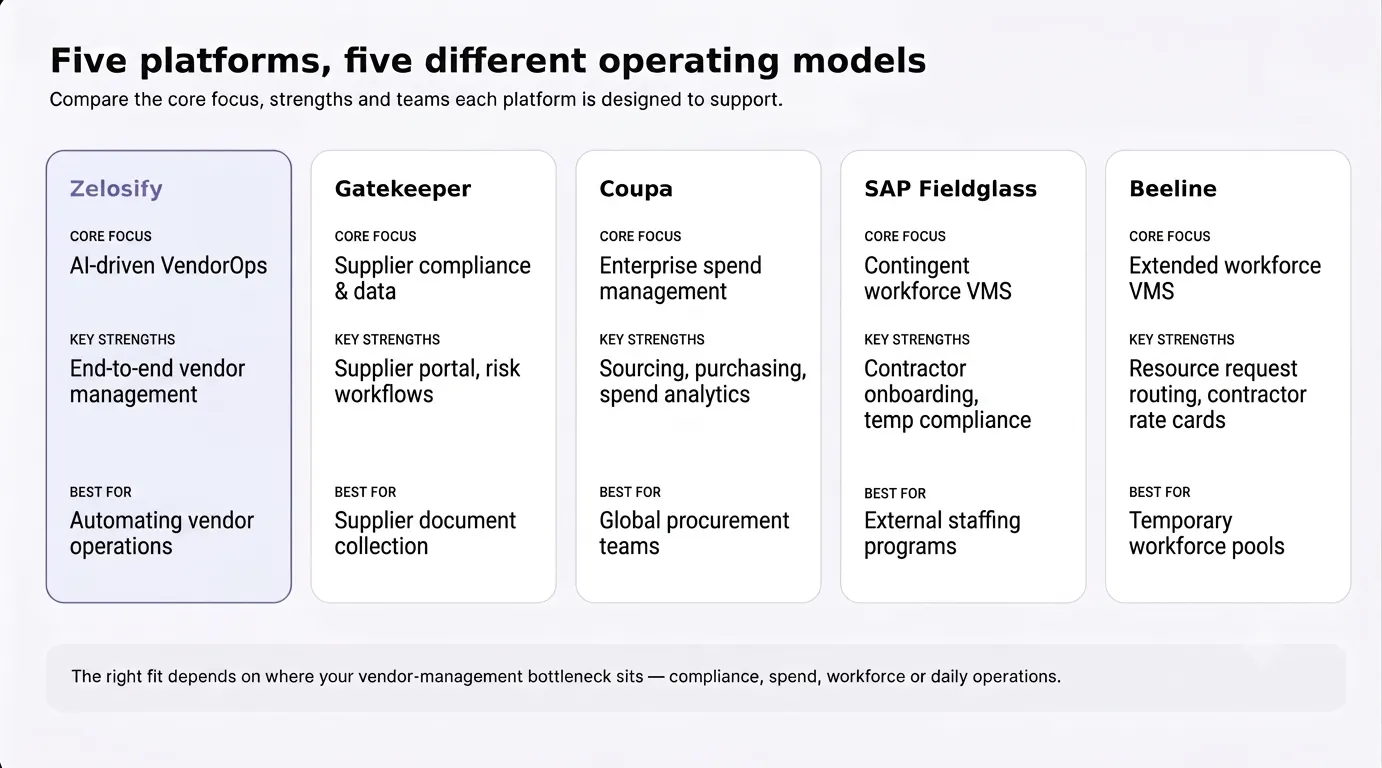
| Platform | Core Focus | Key Strengths | Best For |
|---|---|---|---|
| Zelosify | AI-driven VendorOps | End-to-end vendor management, from onboarding to payment validation | Teams looking to automate their vendor operations |
| Gatekeeper | Supplier compliance & data | Supplier portal, visual risk workflows | Teams prioritizing supplier document collection |
| Coupa | Enterprise spend management | Sourcing, purchasing, spend analytics | Global procurement teams managing massive transaction spend |
| SAP Fieldglass | Contingent workforce VMS | Contractor onboarding, temp staffing compliance | Global enterprises managing large external staffing programs |
| Beeline | Extended workforce VMS | Resource request routing, contractor rate cards | HR and procurement teams managing temporary workforce pools |
In-Depth Reviews
1. Zelosify (AI VendorOps Platform)
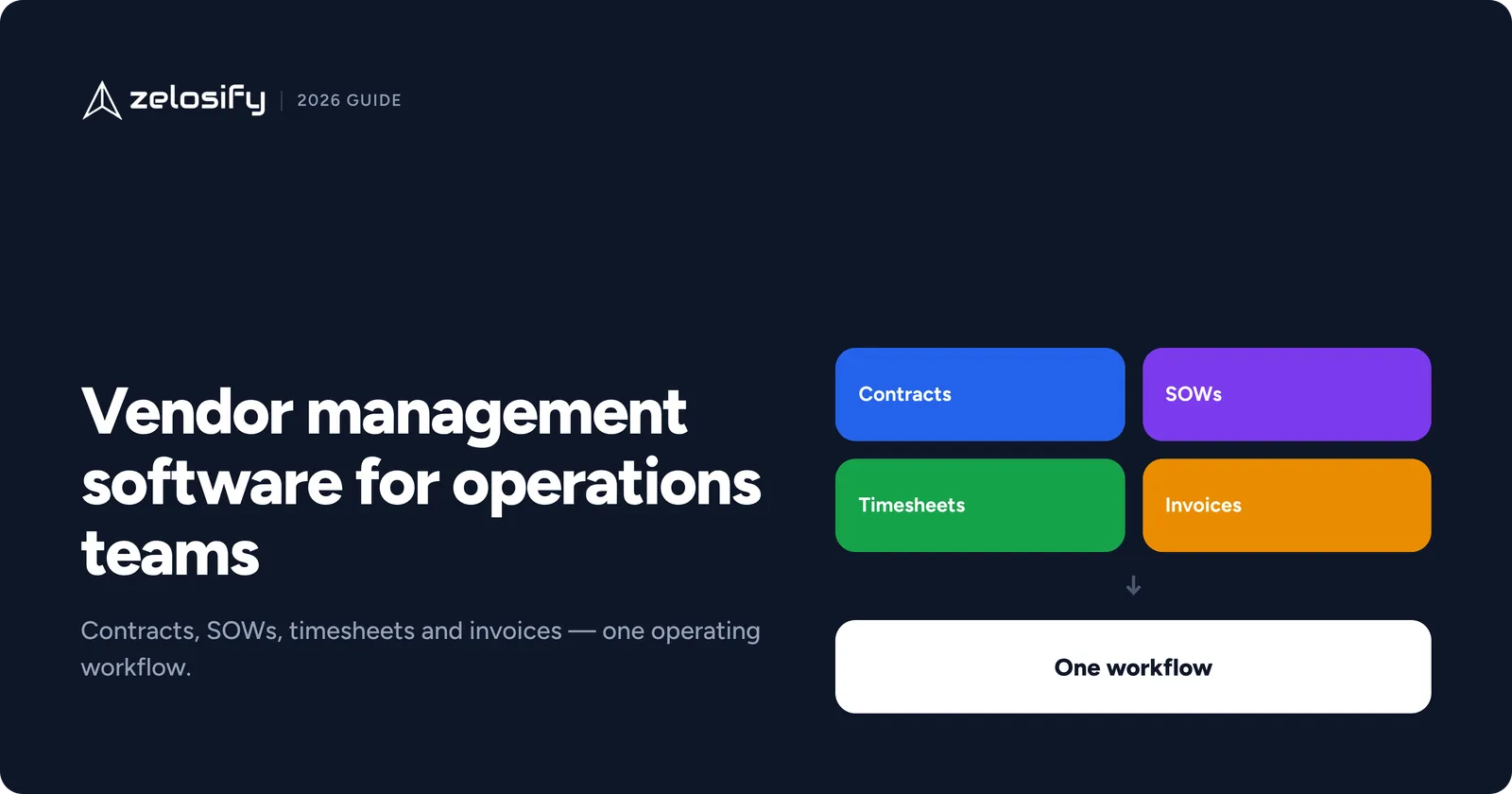
Zelosify is an AI VendorOps platform that brings contracts, SOWs, timesheets, and invoices into one workflow. It helps operations, finance, and procurement teams manage vendors, track contracts and deliverables, monitor billing, manage renewals, and catch billing mismatches. It also helps companies move away from spreadsheets and get better visibility after a contract is signed.
- Key Pros: Manages the complete vendor lifecycle from vendor onboarding and compliance to contract generation, contract management, e-signatures, obligation tracking, and invoice reconciliation all in a single platform.
- Key Cons: Built for speed and end to end vendor management, not suited for organization requiring specialized tools.
- When Zelosify is the better choice: Zelosify is the ideal choice for organizations looking for a fast-to-deploy software that helps you manage your vendor from onboarding to finally doing the invoice reconciliation and everything in between.
- Pricing: Custom pricing (contact sales)
2. Gatekeeper
Gatekeeper is a cloud-based vendor and contract management solution built to manage supplier risk and tighten compliance.
- Key Pros: A good vendor portal that lets suppliers self-onboard and upload compliance documentation directly. The visual Kanban workflow engine makes tracking vendor approvals easy at a glance.
- Key Cons: Designed mainly for vendor risk and compliance, not in-depth financial processes. Dashboard and report customization is limited.
- When Gatekeeper is the better choice: When your real bottleneck is vendor risk compliance and chasing down supplier documents.
- Pricing: Custom pricing (contact sales).
3. Coupa
Coupa is a leading enterprise-grade business spend management platform covering sourcing, purchasing, and invoicing.
- Key Pros: Deep spend visibility analytics and genuinely strong sourcing optimization.
- Key Cons: Heavy implementation overhead, and you'll need separate tools for operational contract compliance.
- When Coupa is the better choice: Global enterprise procurement teams managing massive transactional purchasing volumes.
- Pricing: Custom pricing (contact sales).
4. SAP Fieldglass
SAP Fieldglass is an enterprise cloud VMS built to manage contingent workforce and service procurement programs.
- Key Pros: Deep compliance governance for temporary staffing and independent contractors.
- Key Cons: Configuration is genuinely complex, and it's tied tightly to the SAP ecosystem.
- When SAP Fieldglass is the better choice: Multi-national corporations with large, heavily regulated contingent workforce pools.
- Pricing: Custom pricing (contact sales).
5. Beeline
Beeline is a dedicated extended workforce platform built to help organizations find, manage, and optimize external talent.
- Key Pros: Strong resource request routing, contractor management, and rate card validation.
- Key Cons: No general vendor contract lifecycle features — strictly built for contingent labor.
- When Beeline is the better choice: HR and talent acquisition teams focused exclusively on temporary labor programs.
- Pricing: Custom pricing (contact sales).
Frequently Asked Questions
What is the best software for managing vendors?
For end-to-end operational control, Zelosify is the leading AI VendorOps platform that turns vendor contracts, SOWs, timesheets, and invoices into one operating workflow. Gatekeeper and SAP Fieldglass remain top choices for specialized enterprise risk and contingent labor.
What are vendor management tools?
Vendor management tools centralize supplier onboarding, contract compliance, and invoice reconciliation in one system. They replace disconnected spreadsheets and manual email approvals with structured, auditable workflows across teams.
What are the top 5 procurement software tools?
Leading platforms in 2026 include Zelosify for automated contract-to-invoice reconciliation, Coupa for enterprise spend management, Gatekeeper for supplier risk, and SAP Fieldglass or Beeline for contingent labor.
What are some good apps for vendor management?
Top applications include Zelosify for contract compliance and invoice reconciliation, Gatekeeper for onboarding governance, and Tipalti for payment execution. The right choice depends on whether your team prioritizes risk, payments, or contract operations.
Related Articles
Continue reading more insights and guides from Zelosify.
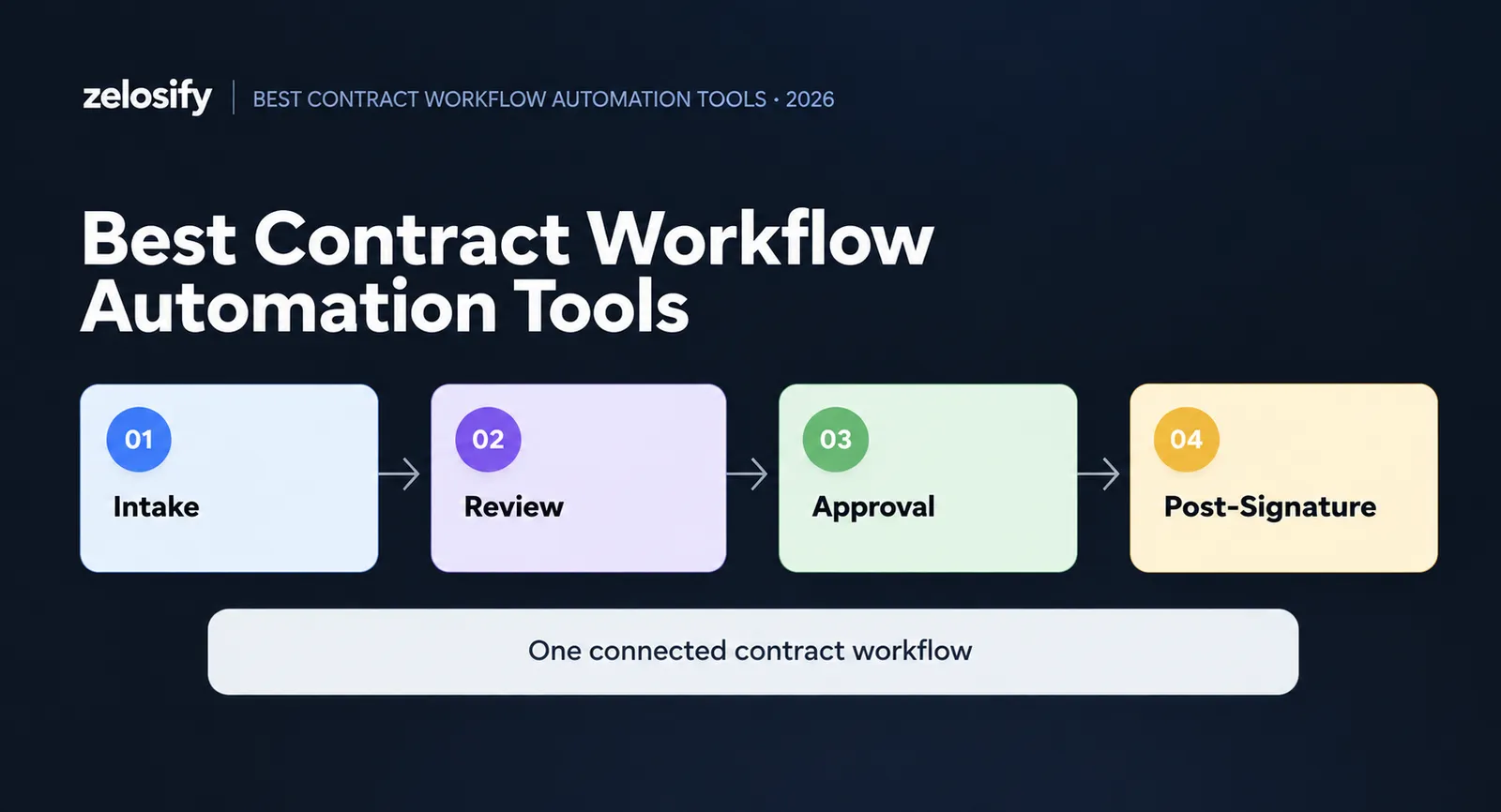
Best Contract Workflow Automation Tools: 2026 Comparison
Compare the top contract workflow automation platforms for operations and procurement leaders in 2026. Discover how platforms like Zelosify, Ironclad, and Sirion streamline approvals and stop spend leakage.
Best Vendor and Contract Management Software: 2026 Guide
A buyer's guide to the top unified vendor and contract management platforms for enterprise and mid-market teams in 2026.